
A Guide to Traditional Jewelry-Making Techniques
- Sep 23, 2025
- 4 min read
Jewelry has been an integral part of Indian culture for centuries. The intricate designs and craftsmanship reflect the rich heritage and artistic skills passed down through generations. Traditional Indian jewelry-making techniques are not only about creating beautiful adornments but also about preserving cultural identity and storytelling through art. This guide explores some of the most renowned methods used in crafting Indian jewelry, offering insights into their history, process, and significance.
The Art of Indian Jewelry: A Historical Perspective
Indian jewelry dates back thousands of years, with archaeological finds revealing exquisite pieces from the Indus Valley Civilization. Over time, various regions in India developed their own unique styles and techniques, influenced by local culture, religion, and available materials.
Some of the most famous traditional styles include:
Kundan: Originating in Rajasthan, this technique involves setting precious stones in gold foil.
Meenakari: A form of enameling that adds vibrant colors to metal surfaces.
Filigree: Delicate metalwork using fine threads of gold or silver.
Jadau: A method of embedding uncut diamonds and precious stones into gold.
These styles are often combined to create stunning pieces that are both artistic and symbolic.

Traditional Kundan necklace showcasing detailed stone settings and gold foil work
Exploring Popular Indian Jewelry-Making Techniques
Kundan Work
Kundan jewelry is characterized by its elaborate stone setting technique. Artisans start with a gold base and carefully place uncut stones, such as diamonds, emeralds, and rubies, using layers of pure gold foil to secure them. This method requires precision and patience, as each stone must be perfectly aligned.
Key features:
Use of uncut or polished stones
Gold foil setting for a secure and radiant finish
Often combined with Meenakari for colorful backs
Meenakari Enameling
Meenakari is the art of coloring metal surfaces with vibrant enamel. This technique originated in Persia and was refined in India, especially in Rajasthan. The process involves applying powdered glass to the metal and firing it at high temperatures to create a smooth, colorful surface.
Steps involved:
Designing the pattern on the metal surface
Applying enamel powders in different colors
Firing the piece in a kiln to fuse the enamel
Meenakari adds a unique vibrancy to jewelry, making it visually striking.
Filigree Work
Filigree involves twisting thin threads of gold or silver into delicate lace-like patterns. This technique is popular in regions like Odisha and Andhra Pradesh. The fine metal threads are soldered together to form intricate motifs such as flowers, leaves, and geometric shapes.
Advantages of filigree:
Lightweight yet detailed designs
Can be combined with gemstones for added elegance
Requires skilled craftsmanship to avoid breakage

Silver filigree earrings displaying delicate lace-like metalwork
Jadau Technique
Jadau is a traditional method where uncut diamonds and precious stones are embedded into gold without the use of glue or solder. The gold is softened and molded around the stones, creating a secure and seamless setting. This technique is labor-intensive and requires expert skill.
Characteristics:
Use of uncut diamonds and precious gems
Gold molded around stones for a secure fit
Often used in bridal jewelry for its grandeur
Tools and Materials Used in Traditional Indian Jewelry-Making
Creating traditional Indian jewelry requires specialized tools and high-quality materials. Understanding these components helps appreciate the craftsmanship involved.
Essential Tools
Jeweler’s saw: For cutting metal sheets and wires
Pliers and tweezers: For handling small components
Engraving tools: To carve intricate designs
Kiln or furnace: For enameling and melting metals
Polishing wheels: To give the final shine
Common Materials
Gold and silver: Primary metals used for their malleability and value
Precious and semi-precious stones: Diamonds, rubies, emeralds, sapphires, pearls
Enamel powders: For Meenakari work
Gold foil: Used in Kundan settings
Using authentic materials ensures durability and enhances the beauty of the jewelry.
Preserving the Craft: The Role of Artisans and Modern Adaptations
Traditional jewelry-making is a skill passed down through families and communities. Artisans dedicate years to mastering these techniques, often working in small workshops or family-run businesses. Their expertise is crucial in maintaining the authenticity and quality of handcrafted pieces.
In recent years, there has been a resurgence of interest in traditional jewelry, partly due to the global appreciation of ethnic and artisanal crafts. Modern designers are blending traditional techniques with contemporary styles to appeal to younger audiences while preserving heritage.
For those interested in owning authentic pieces, exploring collections of handcrafted indian jewelry offers a chance to support artisans and enjoy timeless beauty.
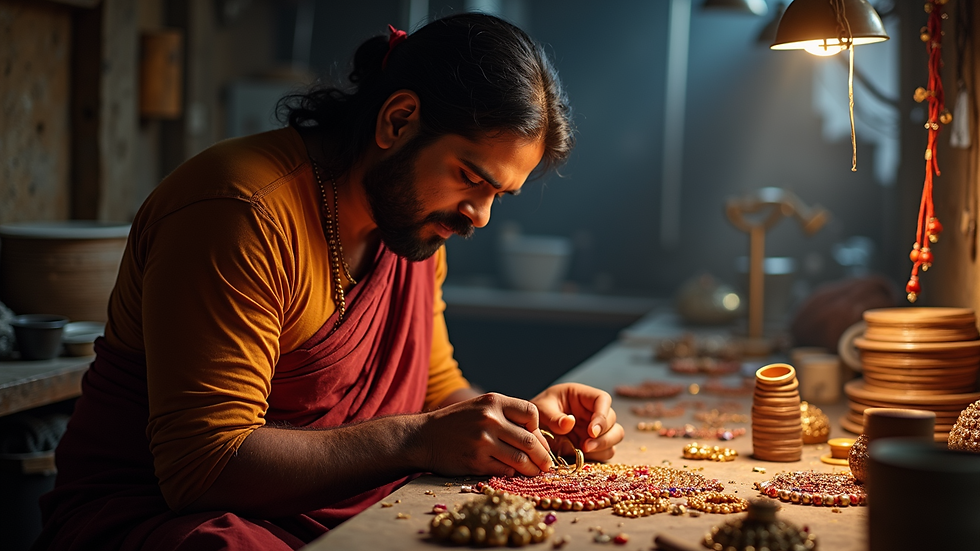
Artisan carefully crafting traditional Indian jewelry in a workshop setting
Tips for Collecting and Caring for Traditional Indian Jewelry
Collecting traditional Indian jewelry can be a rewarding experience. Here are some practical tips to help you make informed choices and maintain your collection:
Research styles and origins: Understanding the history and regional variations helps in identifying authentic pieces.
Verify materials: Ensure the jewelry is made from genuine metals and stones.
Buy from reputable sources: Support trusted artisans or dealers who specialize in traditional craftsmanship.
Proper storage: Store jewelry in soft cloth pouches or lined boxes to prevent scratches.
Regular cleaning: Use gentle cleaning methods suitable for the materials, avoiding harsh chemicals.
Handle with care: Traditional pieces can be delicate, especially those with intricate filigree or enamel work.
By following these guidelines, you can preserve the beauty and value of your jewelry for years to come.
Embracing Tradition in Modern Times
Traditional Indian jewelry-making techniques are more than just methods of crafting adornments - they are a celebration of culture, history, and artistry. Whether you are a collector, a fashion enthusiast, or someone who appreciates fine craftsmanship, understanding these techniques enriches your appreciation of each piece.
Exploring the world of traditional Indian jewelry opens doors to a vibrant heritage that continues to inspire and captivate. By choosing authentic, handcrafted pieces, you not only own a beautiful accessory but also become part of a timeless story.
For those looking to explore or purchase exquisite pieces, consider browsing collections of handcrafted indian jewelry that honor these age-old traditions with modern elegance.


Comments